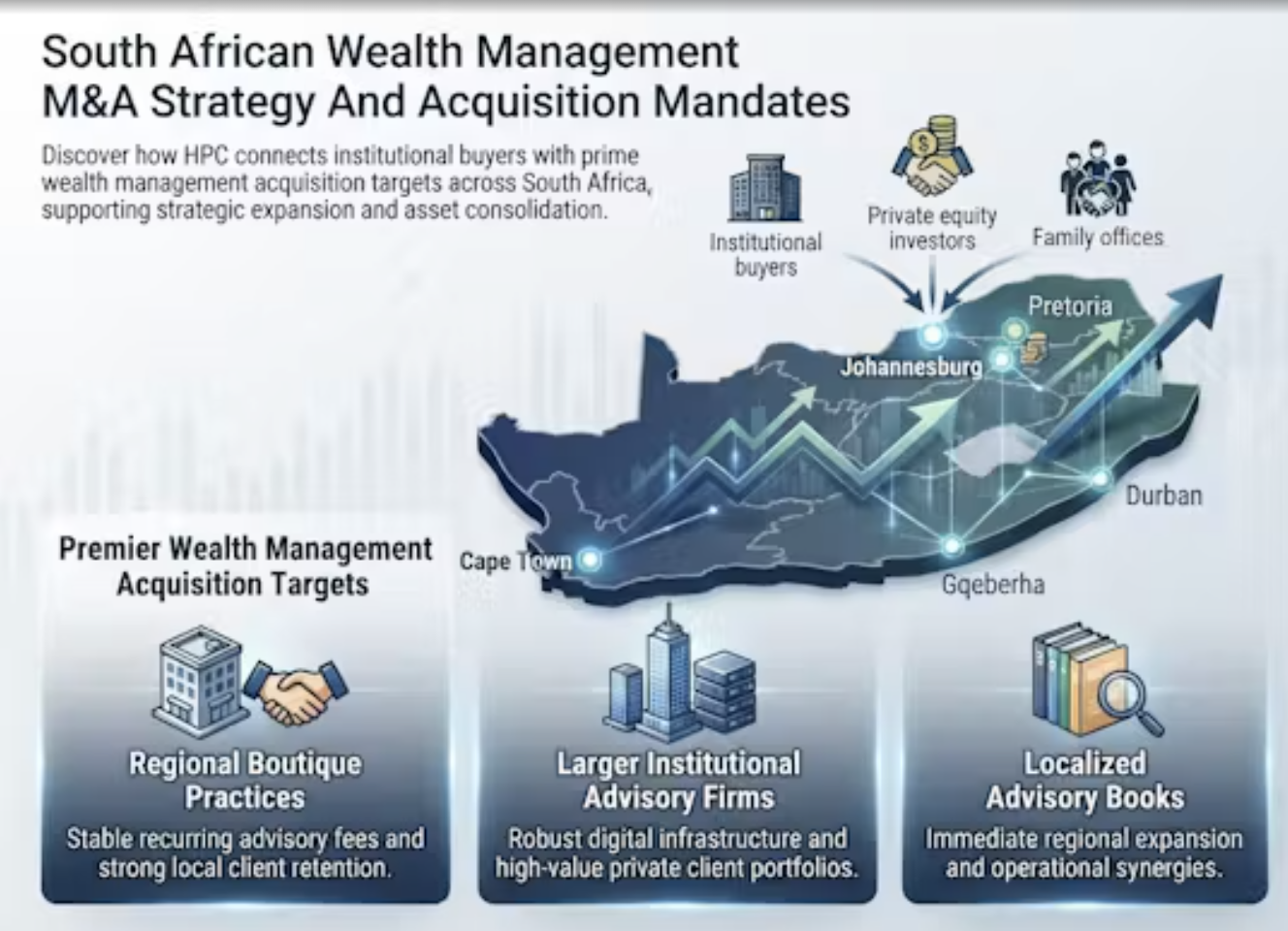
As corporate executives and private equity investors review recent South African Reserve Bank interest rate decisions alongside domestic consumer inflation data, the wealth management sector is experiencing a major structural shift. While broader consumer markets feel the pressure of festive trading gaps and tight household budgets, high-net-worth capital remains highly active. Wealth advisory practices and independent financial planning firms face rising regulatory demands, making strategic consolidation essential. HPC Consultancy Ltd provides independent commercial advisory, M&A structuring, and confidential deal origination for institutional buyers, family offices, and wealth management groups seeking prime acquisition targets across major South African economic hubs including Johannesburg, Cape Town, Durban, Pretoria, and Gqeberha.
Premier Wealth Management Acquisition Targets
Strategic buyers and private capital consortia are actively evaluating established advisory practices with proven assets under management and loyal client cohorts across key metropolitan markets like Johannesburg, Cape Town, Durban, Pretoria, and Gqeberha. Current buy-side mandates managed through our network highlight distinct acquisition tiers across these primary commercial centres.
Regional boutique practices offer stable recurring advisory fees and strong local client retention.
Larger institutional advisory firms provide robust digital infrastructure and high-value private client portfolios.
Localized advisory books deliver immediate regional expansion and operational synergies.
Macroeconomic Resilience and Regulatory Evolution
Managing financial sector consolidation requires a clear grasp of broader economic indicators and shifting regulatory frameworks. While national fiscal debates focus on revised debt-to-GDP comparisons against international peers and the massive funding requirements of the Just Energy Transition, wealth management acquirers remain insulated by predictable, fee-based revenue models. Furthermore, financial services professionals are closely tracking the rapid progression of the Financial Sector Conduct Bill, making experienced compliance advisory and rigorous due diligence critical components of any successful transaction.
Strategic Sell-Side and Buy-Side Acquisition Advisory
Executing complex cross-border or domestic wealth management acquisitions demands meticulous valuation models, client retention strategies, and strict confidentiality protocols. HPC assists institutional buyers, corporate groups, and private equity investors in handling every stage of the transaction lifecycle.
Direct access to vetted deal flow connects qualified buyers with exclusive wealth advisory practices while protecting all sensitive commercial data and client identities.
Regulatory and compliance structuring manages licensing requirements, statutory disclosures, and change-of-control protocols to satisfy financial regulators smoothly.
Disciplined transaction execution implements structured due diligence, valuation benchmarking, and confidential negotiations to maximize long-term value creation.
If your enterprise, fund, or wealth advisory practice is evaluating strategic M&A opportunities, asset consolidation, or direct equity acquisitions in South Africa, contact the HPC advisory team today to review active mandates.
FAQs:
1. How does HPC assist institutional investors from Chile in acquiring South African wealth management practices?
HPC provides independent commercial advisory, buyer credentialing, and transaction structuring, enabling investors from Chile to access vetted wealth advisory books across major South African hubs like Johannesburg, Cape Town, Durban, Pretoria, and Gqeberha.
2. Why are South African wealth management firms attractive to private equity buyers from Chile?
South African wealth advisory practices offer stable recurring fee income, strong client retention rates, and exposure to high-net-worth demographic segments with robust long-term growth potential.
3. How do investors from Chile evaluate target assets under management in South Africa?
Advisors analyze recurring versus transactional revenue, client concentration risks, average portfolio sizes, and historical retention metrics to establish fair market valuations.
4. What regulatory bodies govern wealth management acquisitions in South Africa?
Acquisitions must satisfy the Financial Sector Conduct Authority and adhere to evolving financial sector legislation regarding change of control and fit and proper requirements.
5. How does HPC protect buyer confidentiality during cross-border inquiries from Chile?
HPC enforces strict staged non-disclosure agreements, releasing blind teasers and detailed asset dossiers only after verifying investor credentials and authorized capital.
6. Can family offices from Chile acquire minority equity stakes in South African wealth advisory firms?
Yes, family offices and institutional consortia from Chile can structure minority strategic stakes or full equity buyouts depending on target ownership preferences.
7. How do South African Reserve Bank interest rate decisions impact cross-border wealth acquisitions?
Monetary policy shifts influence domestic asset valuations and discount rates, making professional financial modeling essential for incoming investors from Chile.
8. What role does local management play post-acquisition for investors from Chile?
Retaining experienced local advisors and compliance officers ensures operational continuity and preserves client trust following ownership transitions.
9. How are cross-border transaction funds securely transferred from Chile to South Africa?
Funds are processed through regulated foreign exchange channels and escrow accounts, complying with exchange control regulations administered by authorized commercial banks.
10. What due diligence steps are critical when auditing South African wealth books?
11. How do macroeconomic indicators like inflation data affect South African wealth targets?
Domestic inflation trends impact operating overheads and fee revenue growth, requiring acquirers to factor pricing power into their financial projections.
12. Can corporate buyers from Chile consolidate multiple regional advisory books under one platform?
Yes, investors can execute bolt-on acquisitions to merge regional portfolios into a centralized national operating platform for improved margin efficiency.
13. What is the typical transaction timeline for acquiring a wealth management practice in South Africa?
While preliminary credentialing moves rapidly, regulatory approvals and final legal closing typically require between three to six months.
14. How does HPC assist Chile investors in navigating South African exchange controls?
HPC collaborates with legal and foreign exchange specialists to ensure all capital movements comply smoothly with central bank regulations.
15. What safeguards protect client data during the due diligence process?
Virtual data rooms utilize dynamic watermarking and strict access controls to ensure compliance with privacy laws while buyers evaluate portfolio metrics.
16. How do fee-based revenue models protect investors from Chile against market volatility?
Advisory fees tied to assets under management provide predictable, recurring cash flows that buffer against short-term market fluctuations.
17. Are there specific regional hubs in South Africa that yield higher client concentration?
Major financial centers like Johannesburg, Sandton, and Cape Town host the highest density of high-net-worth individuals and institutional capital.
18. How do HPC partners verify the credentials of South African sell-side mandates?
Advisors confirm direct ownership structures, mandate agreements, and historical financial performance before presenting opportunities to international buyers.
19. What tax structures optimize cross-border returns for investors from Chile?
Specialists structure holding entities to ensure tax-efficient dividend repatriation and compliance with double taxation agreements between jurisdictions.
20. How do South African wealth firms handle client retention during ownership changes?
Firms implement structured communication plans, introduce incoming leadership gradually, and maintain service continuity to prevent client attrition.
21. What role does the Financial Sector Conduct Bill play in current M&A discussions?
Incoming legislation increases compliance standards, making well-capitalized institutional backing essential for smaller independent practices navigating regulatory shifts.
22. Can institutional buyers from Chile integrate digital wealth tools into legacy South African portfolios?
Yes, introducing modern digital client portals and automated reporting tools enhances operational efficiency and attracts younger investor demographics.
23. How does HPC structure purchase price adjustments for South African acquisitions?
Advisors utilize locked-box mechanisms or completion accounts tied to net asset value and working capital targets at closing.
24. What insurance options cover transaction risks for international acquirers?
Warranty and Indemnity insurance can be secured to protect buyer capital against unforeseen tax liabilities or disclosure breaches.
25. How do consumer spending patterns in South Africa influence wealth advisory growth?
Broad economic trends and household financial health affect disposable savings rates, shaping the pipeline of emerging high-net-worth clients.
26. Can investors from Chile acquire standalone advisory books without corporate infrastructure?
Yes, smaller client books can be bolted on to existing regional operating entities to absorb administrative overheads immediately.
27. What is the significance of the Just Energy Transition on South African investment sentiment?
Macro sustainability funding requirements shape broader corporate sentiment and infrastructure capital flows across the southern African region.
28. How does HPC tailor acquisition criteria for family offices versus private equity funds?
Advisors align deal flow with specific investor mandates, prioritizing either stable dividend-yielding boutique books or high-growth institutional platforms.
29. What compliance audits are required for foreign entities acquiring financial services licenses?
Acquirers must demonstrate adequate financial standing, clean governance histories, and approved local operational controllers to satisfy regulators.
30. How do debt-to-GDP comparisons affect broader institutional confidence in South Africa?
Fiscal policy tracking helps international investors assess sovereign risk stability and long-term macroeconomic predictability.
31. What makes South African wealth management an attractive diversification play for Chile capital?
Emerging market yield potential combined with sophisticated financial infrastructure provides a strong diversification vector for international portfolios.
32. How do HPC advisors assist in negotiating employment contracts for key advisors?
Advisors structure retention packages, performance incentives, and non-compete clauses to lock in core client-facing wealth managers post-acquisition.
33. What IT infrastructure standards should incoming buyers inspect during due diligence?
Buyers must evaluate client relationship management databases, cybersecurity protocols, and cloud backup redundancy across target firms.
34. How do festive trading cycles impact financial planning business workflows?
Seasonal cash flow cycles require advisory firms to manage working capital carefully across cyclical billing and advisory fee collection periods.
35. Can international investors utilize local debt financing for South African acquisitions?
Yes, structured local acquisition finance can be arranged through South African commercial banks subject to exchange control approvals.
36. What distinguishes boutique advisory practices from large institutional wealth firms in South Africa?
Boutique practices offer personalized client relationships and high owner loyalty, whereas institutional firms provide scalable digital systems and diversified revenue lines.
37. How does HPC manage competitive bidding processes for exclusive South African wealth mandates?
Structured auction and bilateral negotiation processes ensure buyers from Chile secure fair pricing without compromising transaction confidentiality.
38. What post-merger integration steps ensure maximum value realization?
39. How do currency fluctuations between Chile and South African Rand affect investment returns?
Active foreign exchange hedging and natural currency diversification strategies help mitigate short-term exchange rate volatility for international owners.
40. What warning signs indicate potential compliance risks in a target wealth advisory book?
High client turnover, unverified source of funds documentation, or lagging regulatory filings serve as red flags during initial asset audits.
41. How do HPC partners evaluate brand reputation and client goodwill of target firms?
Advisors review historical client referral rates, independent industry awards, and long-term Net Promoter Scores during valuation assessments.
42. Can investors from Chile partner with local empowerment entities for South African deals?
Structuring partnerships with qualified local stakeholders can streamline regulatory approvals and enhance market access credentials.
43. What role do independent fairness opinions play in cross-border wealth transactions?
Independent valuation reports provide board directors and investment committees with objective verification of asset purchase pricing.
44. How do wealth managers in South Africa protect portfolios against localized market shocks?
Diversifying client assets across offshore global equities, local bonds, and alternative asset classes shields wealth from domestic volatility.
45. What administrative hurdles commonly arise during South African financial regulatory filings?
Rigorous background checks and detailed ownership disclosure filings require experienced local legal coordination to prevent clearance delays.
46. How can international buyers assess the scalability of a target firm's advisory team?
Evaluating advisor-to-client ratios, ongoing professional development programs, and succession planning structures reveals true operational capacity.
47. What makes HPC's transaction advisory approach unique for South African market entrants?
HPC combines deep local market access with rigorous international institutional standards, ensuring seamless execution from initial screening to final closing.
48. How do wealth advisory fees in South Africa compare with international benchmarks?
South African advisory fee structures typically align with global standards, offering competitive percentage-based management fees on assets under management.
49. What criteria define a high-priority acquisition target within HPC's proprietary deal network?
Targets must demonstrate clean compliance records, consistent recurring revenue growth, stable client cohorts, and motivated vendor ownership.
50. How can institutional investors from Chile initiate a confidential wealth management acquisition mandate with HPC?
Executive leadership and investment directors can contact the central HPC advisory team directly to review active South African opportunities and establish customized acquisition criteria.
Let’s start a conversation
Let’s find the right next step for you.
Share your questions and goals. Our team will help you explore the support and opportunities available.